Contact
Radar Apps

Radar Display

Control your screens from the Mac menu bar. Share a monitor without unplugging, bring back your display settings, and choose when your Mac stays awake.

Coming soonmacOS 26+Apple Silicon

Native Mac app · no Dock icon

Radar Display app icon
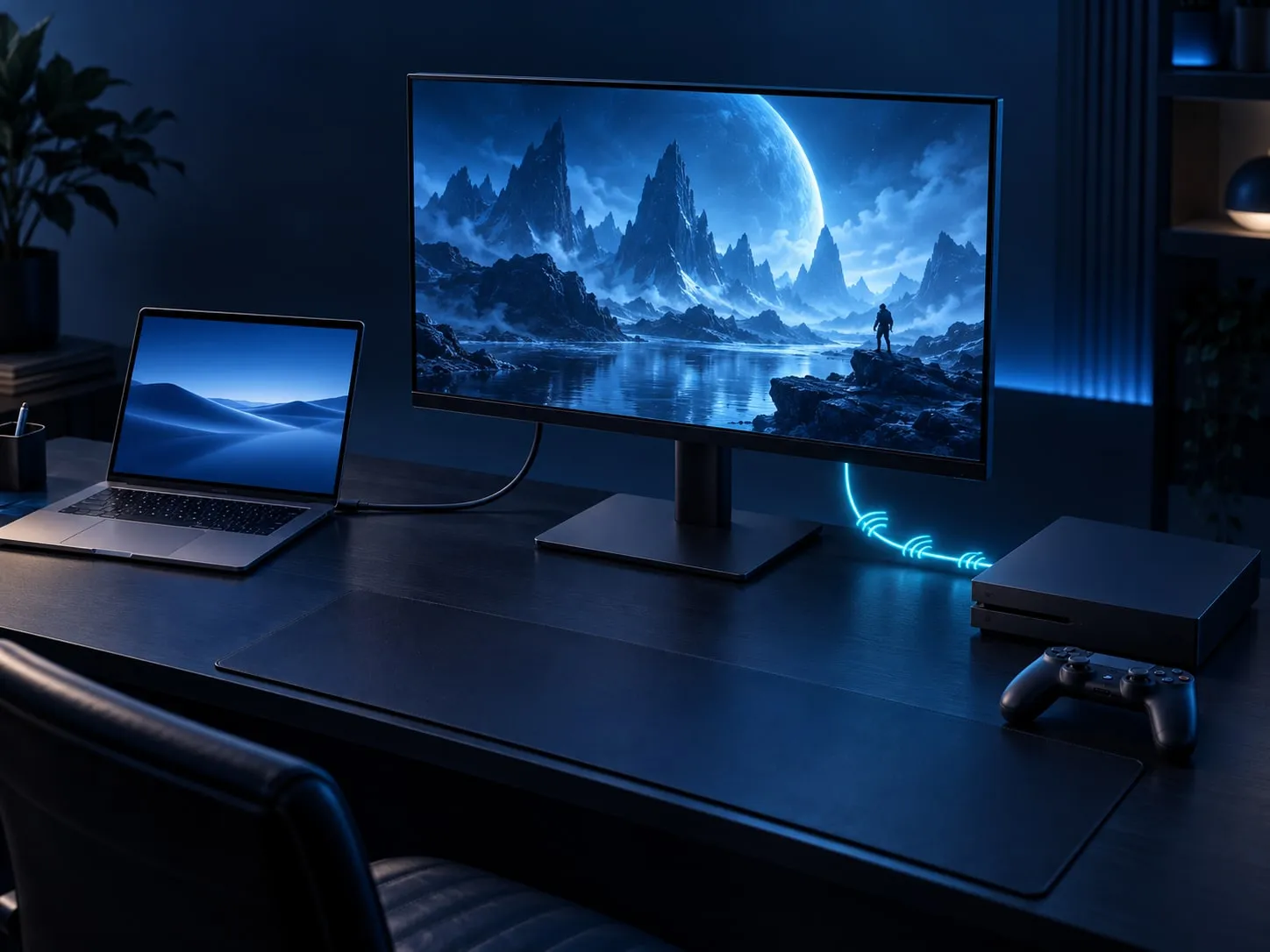
A shared monitor showing a console game while the MacBook stays connected, with a cyan pulse marking the console connection
What it does

Your displays, connected and configured.

Display connection

Share a monitor without unplugging.

One monitor for work and games, or two computers sharing a desk. Choose which screens belong to your Mac’s desktop without moving a cable.

  • Disconnect and reconnect, remove a monitor from your Mac’s desktop while another device uses it, then bring it back from the menu bar.
  • Select the other input, use your monitor’s input controls or automatic input switching to choose the console or computer you want to see.
  • Use only your external monitor, turn off the MacBook’s built-in screen while leaving the lid open.
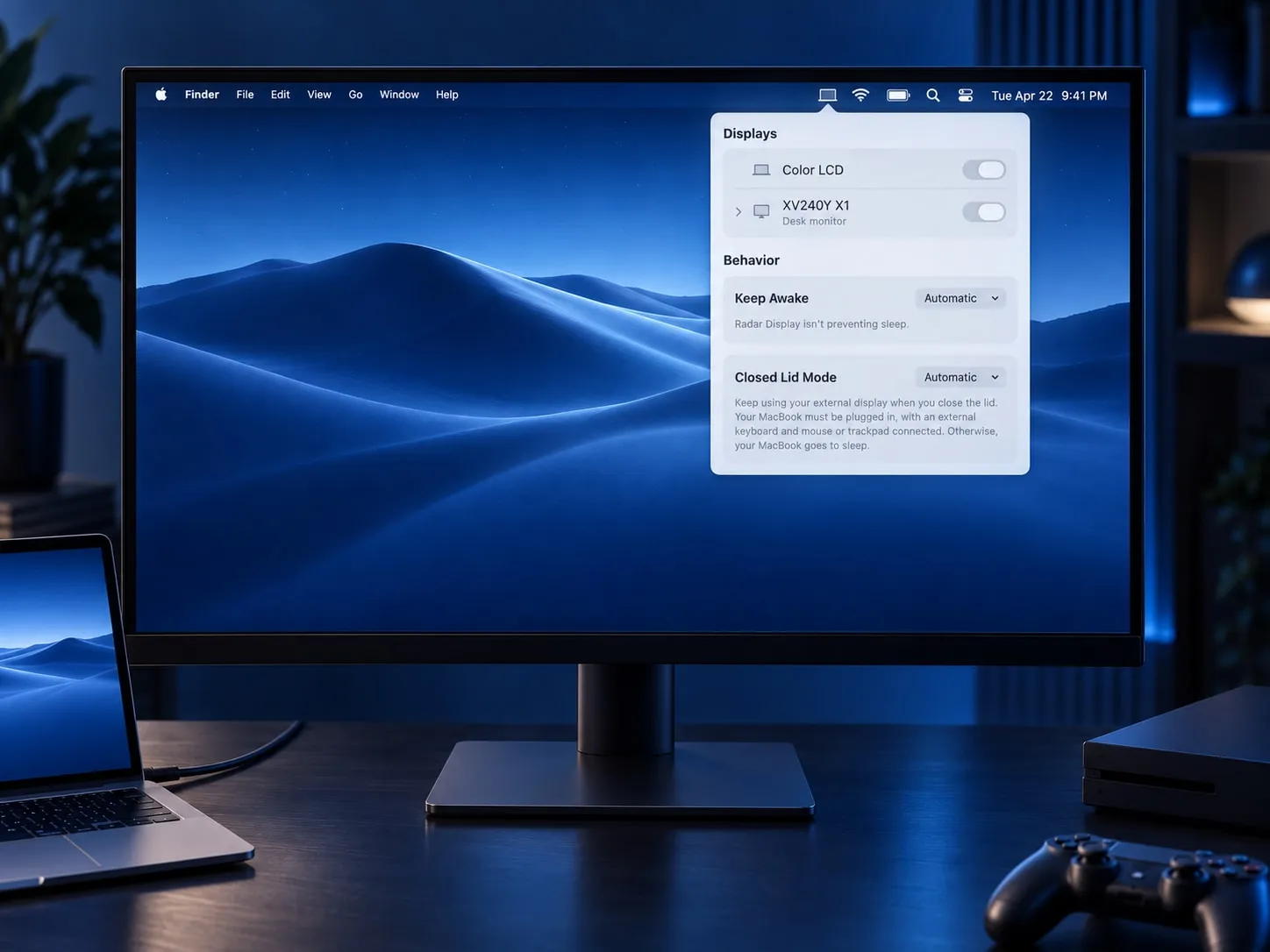
A large external monitor showing Radar Display open from the macOS menu bar, with a MacBook and game console beside it
Display settings

Make each screen comfortable to use.

Make text easier to read, fit more of your work on screen, or adjust the picture for the room. Your everyday display controls are together in one menu bar panel.

  • Choose your working size, adjust scaling or resolution to balance readable text with room for your apps.
  • Set the refresh rate, choose from the rates available on your current display and connection.
  • Adjust brightness and color, use brightness, automatic brightness, HDR, True Tone, color profiles, and reference presets where supported.
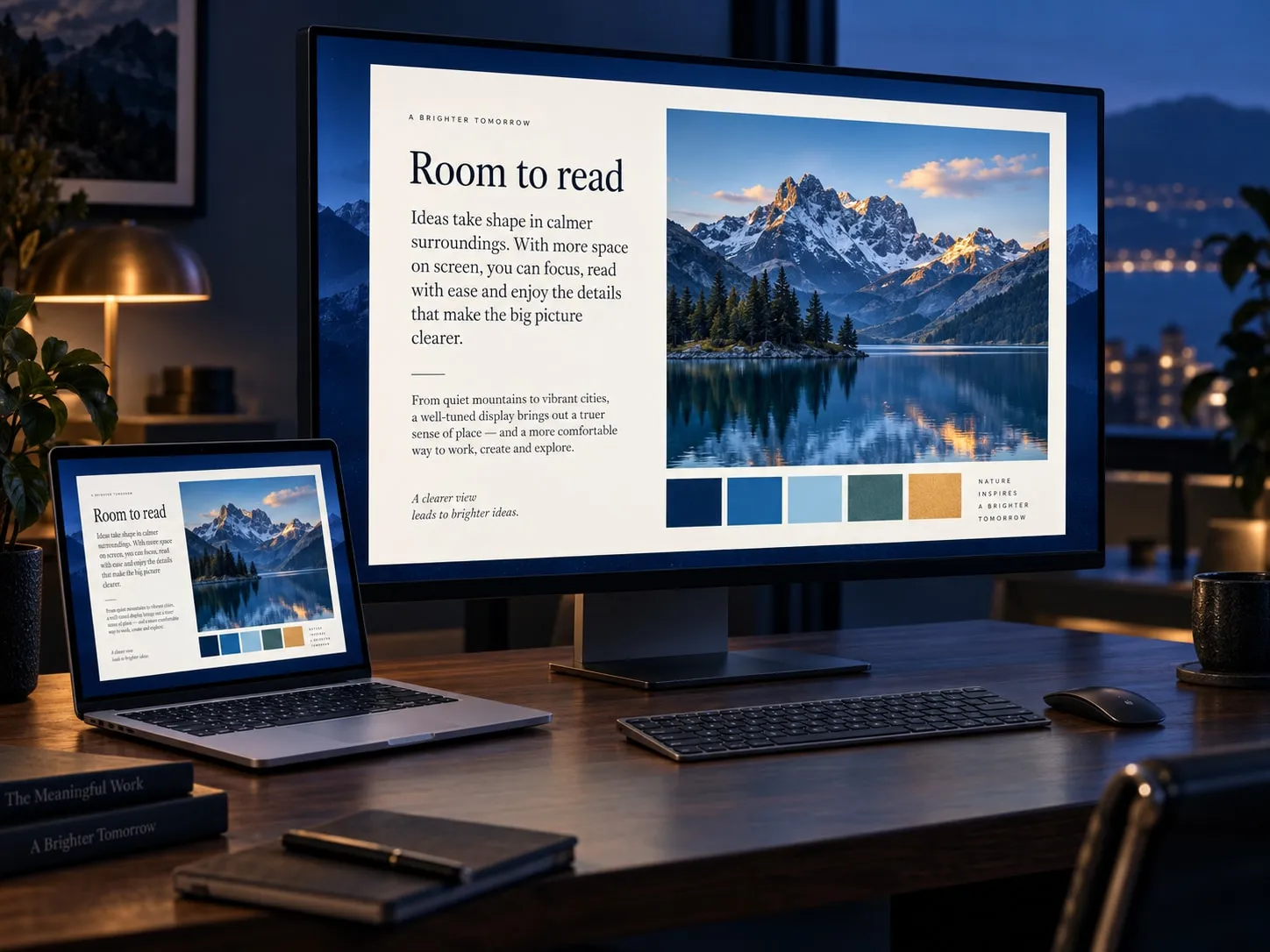
A document with large readable type, a detailed landscape, and color swatches on an external monitor, shown at a smaller scale on a MacBook
Workspace arrangement

Give every screen its place.

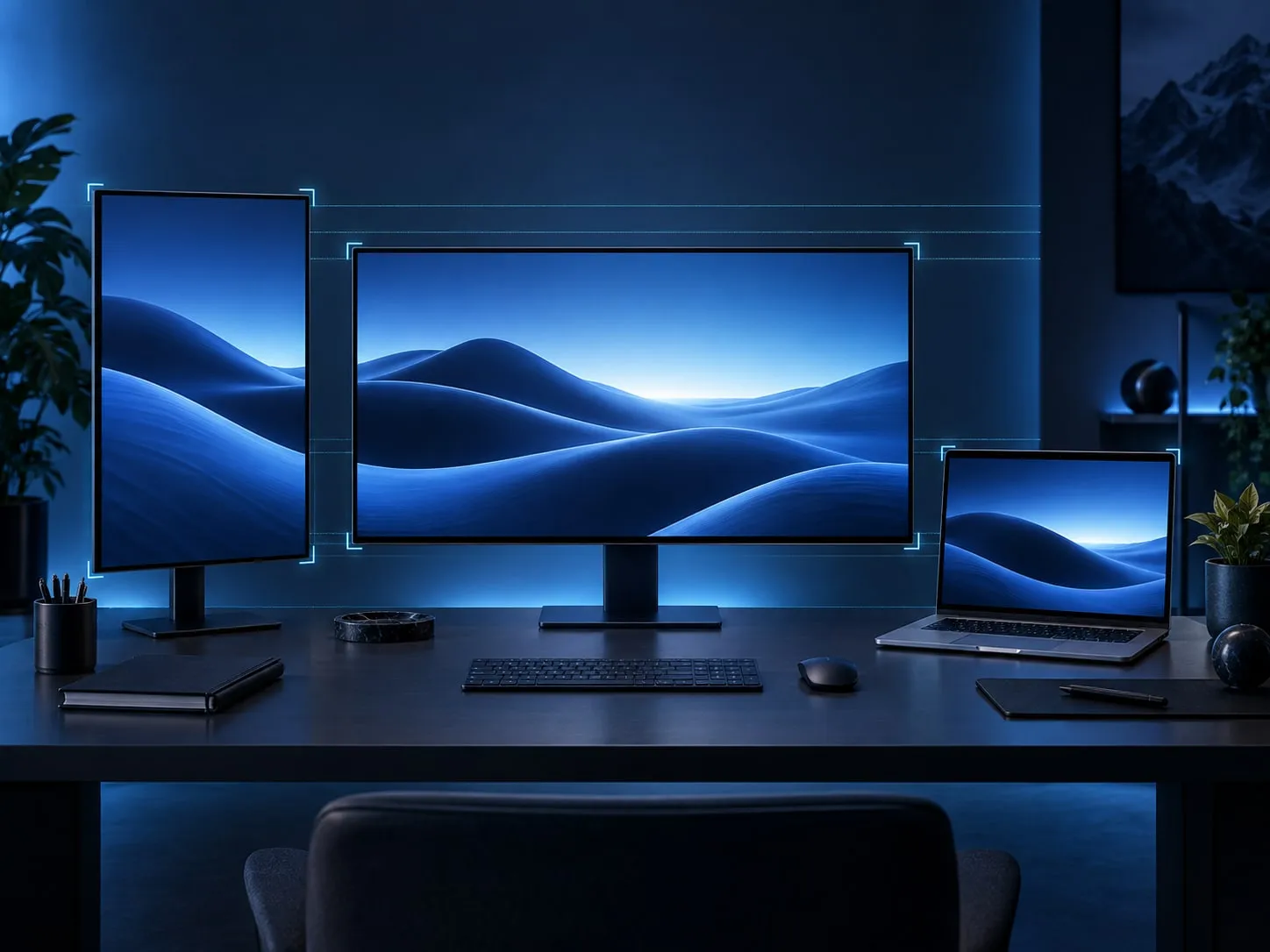
A second or third screen should make your desk easier to use. Match the desktop layout to the screens in front of you and choose the role each one plays.

  • Match your desk, place a display to the left, right, above, or below another screen.
  • Choose the main display or mirror, put your primary workspace on the screen you prefer, or show the same content on another.
  • Work in portrait, rotate a supported monitor for long documents, code, or a full page view.
  • Give monitors custom names, tell matching screens apart with labels like “Left monitor” and “Portrait monitor.”
A portrait monitor, landscape monitor, and MacBook arranged across one desk, with cyan guides highlighting their relative positions
Remembered settings and layout

Come back to the setup you chose.

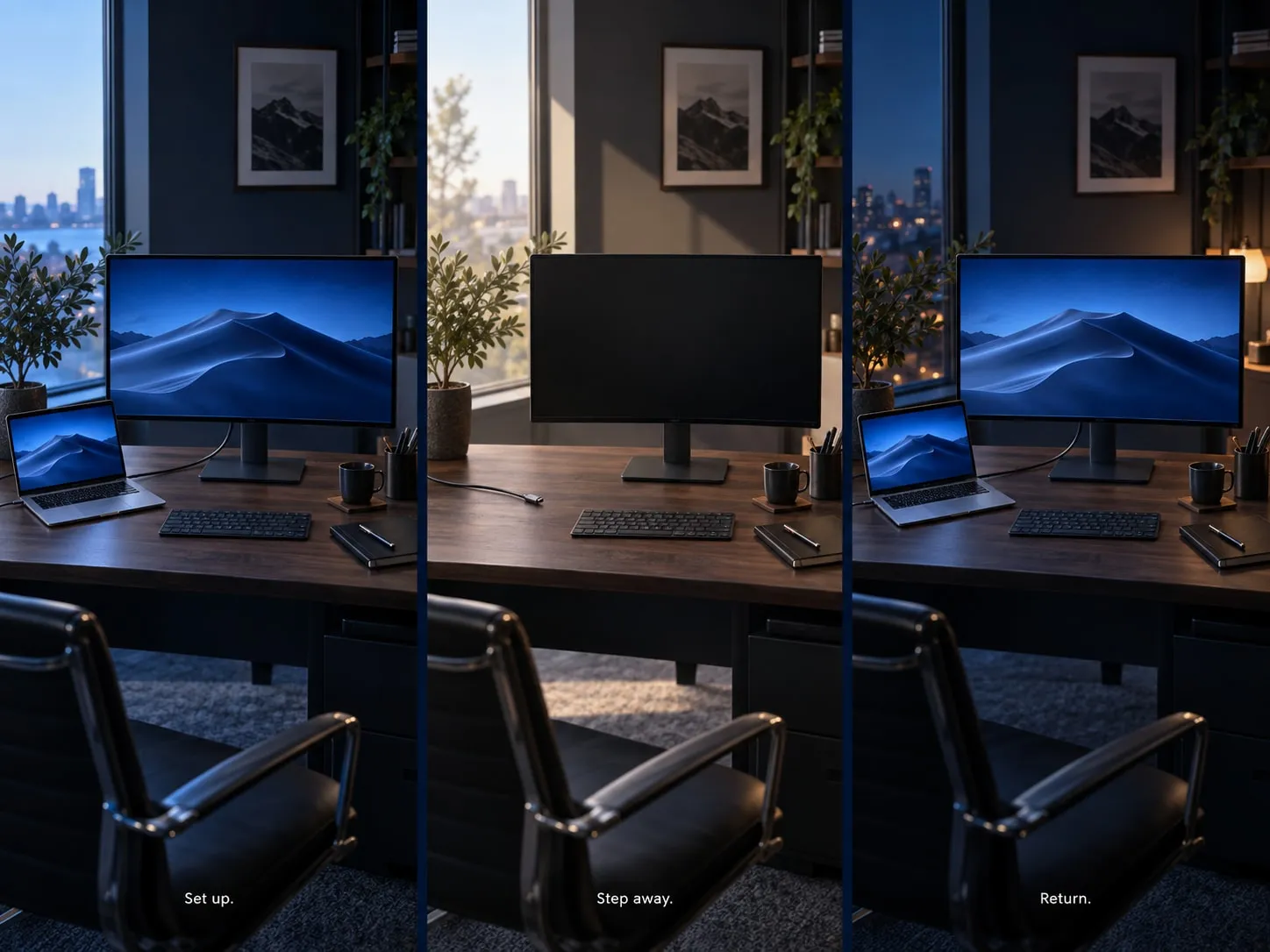
A monitor returning at the wrong size or refresh rate interrupts your work. Radar remembers your preferences and restores supported settings when a physical display becomes active again.

  • Skip the repeated setup, recover your preferred settings after reconnecting, waking your Mac, opening the lid, or handing a monitor back from another input.
  • Keep your layout familiar, saved relative positions are reapplied as screens return to your desktop.
  • Use System Settings too, supported changes made there are remembered while the display stays active.
Three views of the same desk: a configured monitor and MacBook, the monitor disconnected while the laptop is away, and the familiar display setup restored on return
iPad and Sidecar

Make room with your iPad.

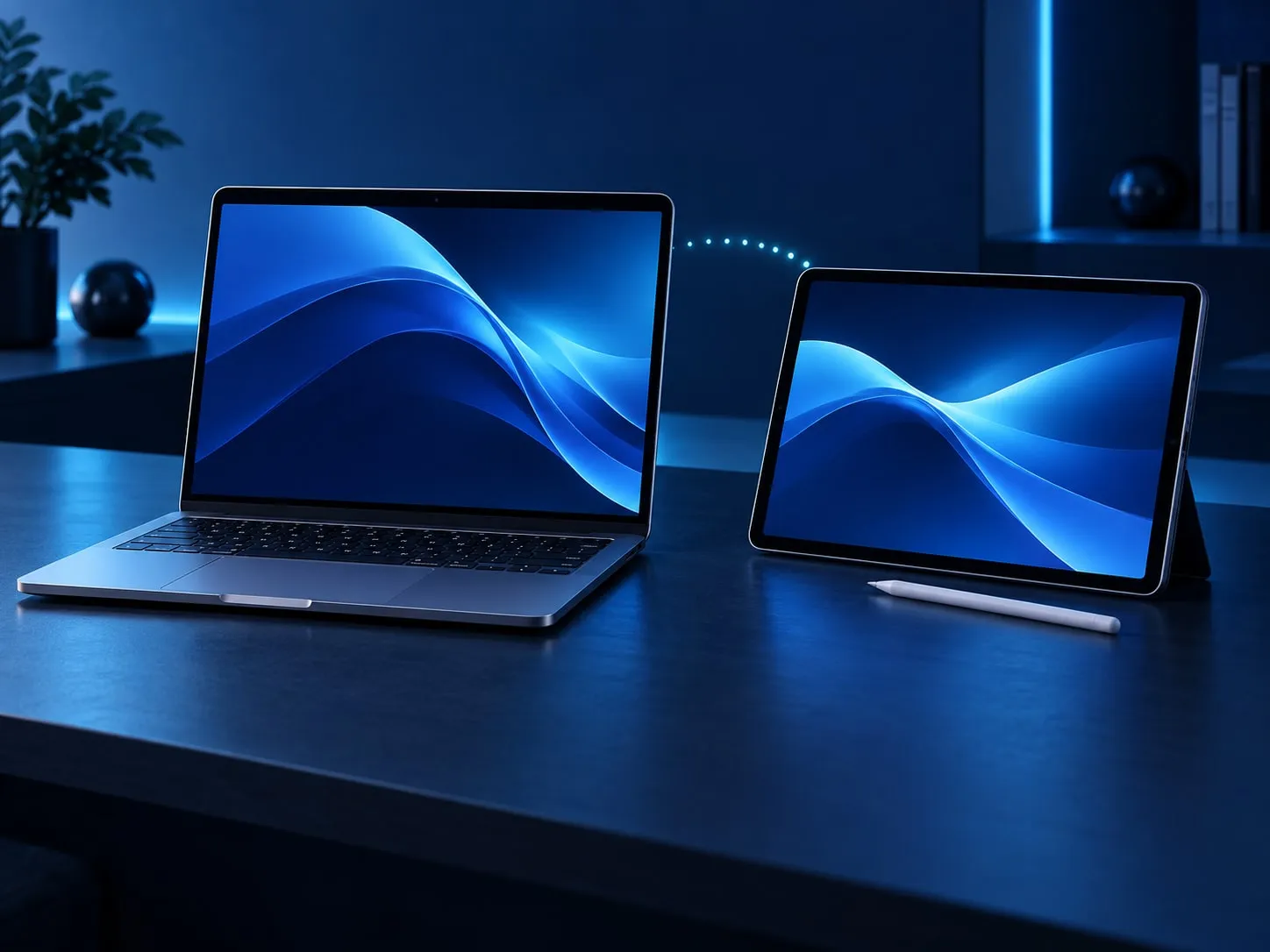
Keep a reference beside your work or spread out a crowded desktop. Manage your compatible iPad alongside your monitors.

  • Connect over USB or Wi-Fi, start and end Sidecar sessions from the menu bar.
  • Fit the workspace to the task, adjust scaling, position your iPad beside another screen, and use it as your main, extended, or mirrored display.
  • Place your Sidecar controls, show, hide, or move the Sidebar and Touch Bar.
  • Use Apple Pencil double-tap, enable or disable it where supported.
A MacBook and iPad side by side with complementary blue desktops, illustrating an extended workspace through Sidecar
Keep Awake

Keep the work going when you step away.

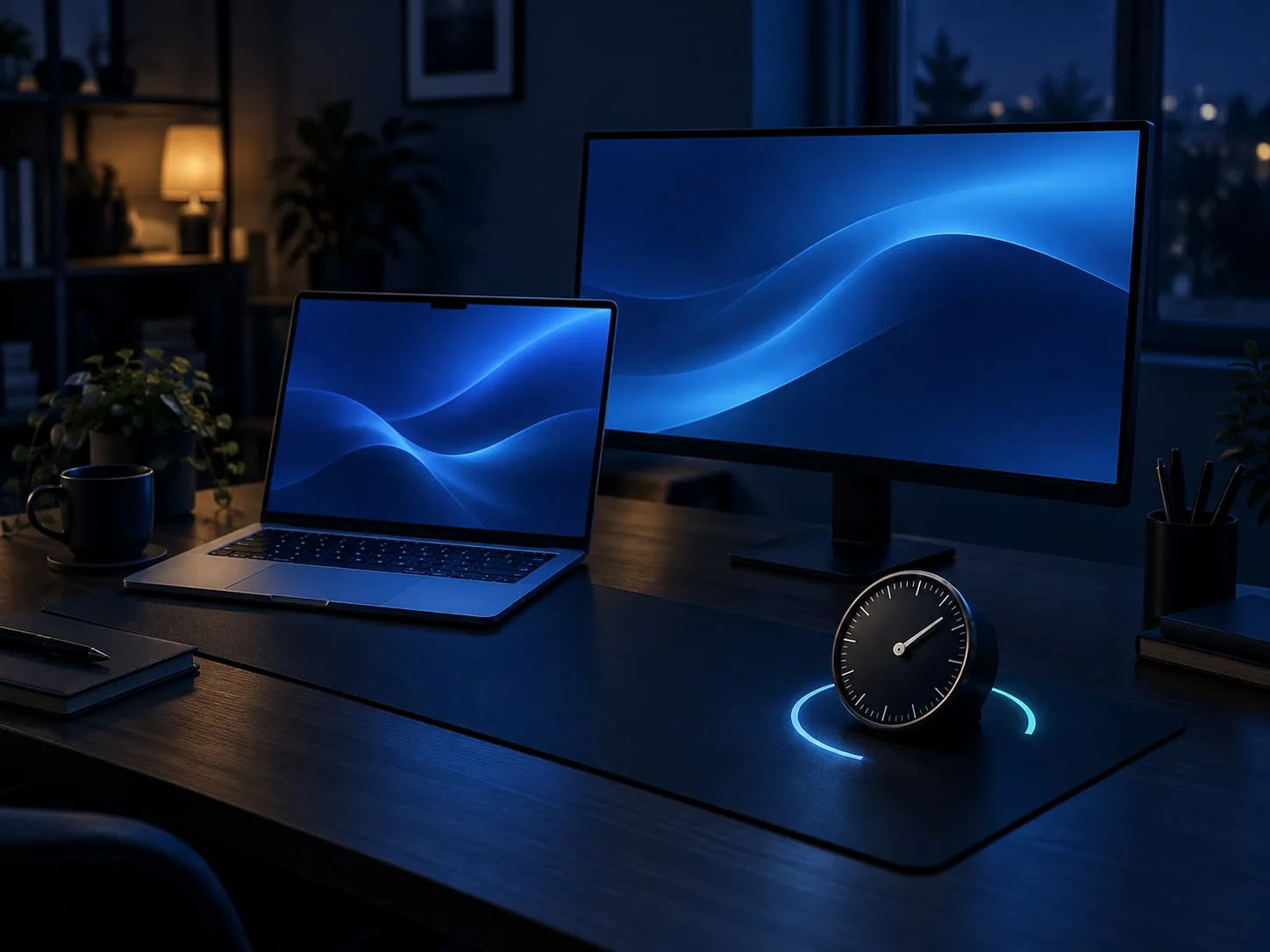
Let a long download finish or keep your presentation ready for an audience. Keep your Mac desktop or open MacBook working while you’re away.

  • Choose how long, use Always, or start a Timed session for a duration or until a chosen date and time. Switch back to Automatic when you’re done.
  • Let the screens rest, choose whether displays stay on or follow their normal sleep schedule during a Timed session.
  • Set a battery cutoff, optionally stop sleep prevention at your chosen battery level in Timed mode.
  • See what’s active, check the menu bar indicator and panel status to know when Radar Display is keeping your Mac awake and why.
A MacBook and external monitor still illuminated at night beside a desk timer, illustrating a timed Keep Awake session
Closed Lid Mode · MacBook

Close the lid. Choose what happens next.

Closing your MacBook can mean settling into your desk, leaving a task running, or finishing for the day. Choose the behavior that fits.

  • Stay awake, keep using your external monitor, even on battery.
  • Screens off, keep the MacBook screen and attached physical monitors dark while downloads and background work continue.
  • Sleep, put your MacBook to sleep when you close the lid, even when plugged in.
  • Automatic, follow the standard macOS closed-lid behavior.
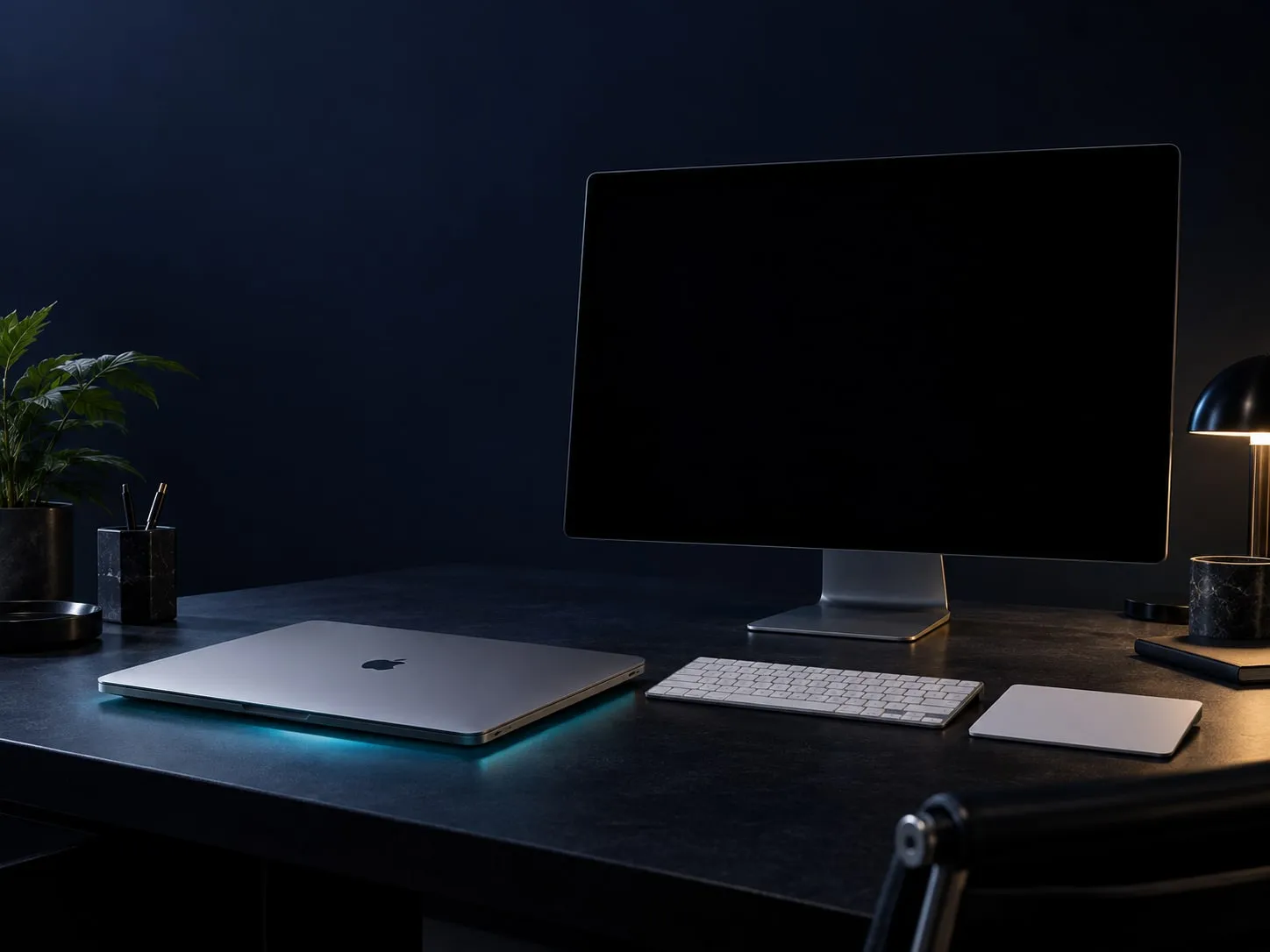
A closed MacBook beside a dark external monitor, illustrating Screens off mode while background work continues
The details

Specifications.

Requirements
macOS 26+
Compatibility
Apple Silicon Macs
Displays
Directly attached monitors and the built-in display
iPad
Wired or wireless Sidecar on compatible devices
Controls
Available settings depend on the display and connection
Footprint
Menu bar only · no Dock icon · optional Launch at Login
Questions

Good to know.

Why won’t Radar Display be on the Mac App Store?

Radar Display gives you control over your screens using macOS capabilities that Apple does not permit in App Store apps. Offering it directly lets us include features like disconnecting a monitor without unplugging. You’ll be able to download it here from Tomita Tech.

How do I share a monitor with another device?

Disconnect the monitor in Radar Display, then select your console or other computer using the monitor’s input controls. To return, reconnect in Radar Display and select the Mac’s input. Radar Display manages the Mac’s display connection; input selection uses the monitor’s controls or its automatic input switching. The cable stays plugged in.

Which Macs and displays does it support?

Radar Display is designed for Apple Silicon Macs running macOS 26 or later. It manages the built-in display and directly attached physical monitors, plus compatible iPads through Sidecar. AirPlay displays and other virtual displays are excluded.

Will every monitor have the same controls?

No. Available settings depend on the display and connection. Radar Display shows a control only when it can read and change that setting on the current display.

Which settings does Radar remember?

For physical displays, Radar remembers resolution, scaling, refresh rate, rotation, HDR, and color profile, restoring them when the display and connection still support the saved choice. Saved relative positions also apply to Sidecar displays. Automatic settings restoration does not include brightness, automatic brightness, True Tone, reference presets, main display selection, or mirroring.

Can I turn off my MacBook’s built-in screen?

Yes, while another physical screen is active. Manual connection changes are guarded so you cannot disconnect the last active physical display. A Sidecar iPad does not count toward that guard. Closed Lid Mode has its own behavior: Screens off keeps the built-in screen and attached physical monitors dark, but does not end Sidecar sessions.

What do I need to use my MacBook with the lid closed?

To use an external monitor, connect an external keyboard and mouse or trackpad. Automatic mode also requires power; otherwise, your MacBook sleeps. Stay awake works on power or battery. In Screens off and Sleep modes, open the lid to bring the screens back; keyboard and mouse activity won’t.

Does it need extra permissions?

Stay awake and Screens off in Closed Lid Mode require an optional helper that you approve in System Settings. The app shows when approval is needed. These modes prevent automatic system sleep even with the lid open and continue using power, including on battery. Ordinary Always and Timed Keep Awake sessions do not require the helper.

What happens when a timer ends or the battery reaches the cutoff?

When a Timed session ends, Radar Display releases that session’s sleep prevention. It does not force the Mac to sleep, and an active Closed Lid Mode override can still keep it awake. Battery cutoff works only in Timed mode while running on battery: it ends the session and pauses Radar Display’s sleep prevention, including the closed-lid override. Connecting power does not restart it. Resume clears the pause when power conditions allow; start a new session for another timer.

What happens if I quit the app?

On normal quit, Radar Display attempts to reconnect the displays it disconnected that are still attached. A force quit cannot run that cleanup; relaunch the app and reconnect the display if needed. Reconnecting can briefly pause the desktop while macOS rearranges its screens.
Get Radar Display

Coming soon for Mac.

A direct Mac download is in preparation. Pricing and the release date will be announced here.